
Ultrasonic vs Evaporative Humidifier: Which Is Better?
A side-by-side comparison of ultrasonic vs evaporative humidifier on firmness, materials, cooling, sizes and care, using manufacturer specifications.
 By PomfySleep Editorial Team
Updated November 28, 2026
Ultrasonic and evaporative humidifiers both add moisture to a room, but they do it differently, and that affects noise, mess, filters and care. This guide compares the two so you can match a type to your bedroom.
It is based on published guidance and manufacturer listing details, not personal use. Figures come from the makers.
The short answer
Ultrasonic units are usually the quieter and smaller choice, and in the listings we reviewed they were generally lower priced. They release a visible mist. Evaporative units blow air through a wet filter, release no visible mist and are typically larger and heavier. Neither is better for everyone, and both need regular cleaning.
Side-by-side
| Ultrasonic | Evaporative | |
|---|---|---|
| How it works | A vibrating element breaks water into a fine mist | A fan draws air through a wet wick or filter |
| Visible mist | Yes | No, listings describe it as mist-free |
| White dust | Possible with mineral-rich water | Listings say none, and some say tap water is fine |
| Filter | Many listings say filter-free | Uses a wick or filter, washable on some models |
| Size and weight | Often compact | Often larger, for example 5.7 pounds up to 13.2 pounds in our examples |
| Noise | Listings range from about 21 dB to 35 dB | Listings include 19 dB to 27 dB |
White dust and water
Ultrasonic units can release minerals from the water into the air, which can leave a fine dust on furniture. The EPA advises low-mineral water such as distilled water to limit this. Several evaporative listings say their units avoid white dust and work with tap water, but follow your manual and keep the filter clean.
Upkeep
Both types need regular care. The EPA advises emptying, drying and refilling portable units daily and cleaning them about every third day, and evaporative units add a filter to maintain or replace. See how often to clean a humidifier for a schedule.
Examples of each type
| Award | Product | PomfySleep Score About PomfySleep ScoreThe PomfySleep Score is our own rating from 0 to 10, based on performance, design and build, ease of use, and value. It reflects independent research and is never influenced by manufacturers, retailers, or affiliate commissions. Learn more › | Price | |
|---|---|---|---|---|
 DREO 4L Humidifiers for Bedroom, 36H Runtime |
$33.99 | Buy | ||
 Afloia 1.45 Gal Evaporative Humidifier |
$99.99 | Buy | ||
 AIRVIP Evaporative Humidifier for Bedroom |
$65.99 | Buy | ||
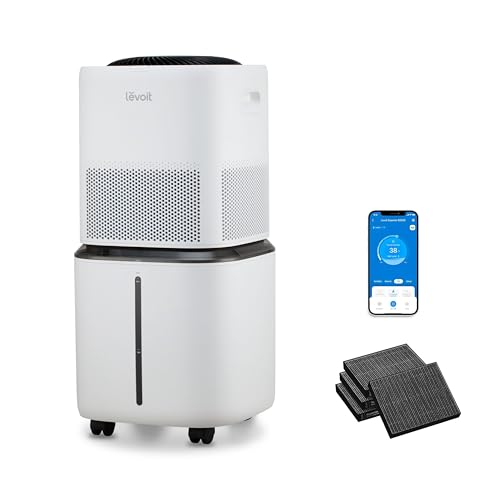 Levoit Evaporative Humidifiers for Bedroom, 19dB |
$249.99 | Buy |
DREO 4L Humidifiers for Bedroom, 36H Runtime
Afloia 1.45 Gal Evaporative Humidifier
AIRVIP Evaporative Humidifier for Bedroom
Levoit Evaporative Humidifiers for Bedroom, 19dB
The DREO 4L is an ultrasonic example. The Afloia, AIRVIP and Levoit Superior Studio listings describe evaporative units, with listed tank sizes of 5.5, 4 and 23 liters.
Humidity control
Evaporative humidification slows as the air gets damper, but do not rely on that alone. The EPA advises keeping indoor humidity below 50%, and some listings allow targets up to 70%, so use a hygrometer and set a low target.
Who should pick which
- Pick ultrasonic if: you want a compact, quiet unit and will use distilled water.
- Pick evaporative if: you dislike visible mist or white dust, have space for a larger unit, and will keep the filter clean.
- Skip both if: your room is already damp or you will not clean the unit regularly.
Next steps
See our best ultrasonic humidifiers and best evaporative humidifiers roundups, the bedroom humidifier buying guide, and the Humidifiers category.
About the author

The PomfySleep editorial team researches and reviews sleep products using published specifications, manufacturer certifications, and customer feedback patterns. We do not claim to have personally used every product we cover. Read How We Review for our full process.